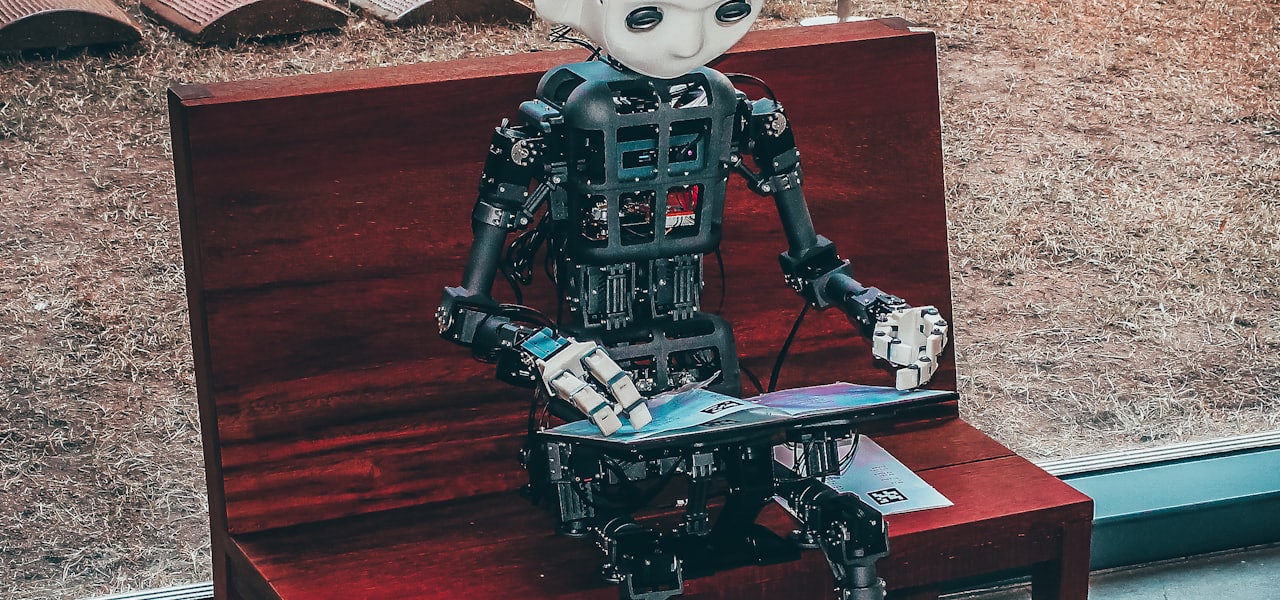
In information science, an ontology encompasses a representation, formal naming, and definitions of the categories, properties, and relations between the concepts, data, or entities that pertain to one, many, or all domains of discourse. More simply, an ontology is a way of showing the properties of a subject area and how they are related, by defining a set of terms and relational expressions that represent the entities in that subject area. The field which studies ontologies so conceived is sometimes referred to as applied ontology. Every academic discipline or field, in creating its terminology, thereby lays the groundwork for an ontology. Each uses ontological assumptions to frame explicit theories, research and applications. Improved ontologies may improve problem solving within that domain, interoperability of data systems, and discoverability of data. Translating research papers within every field is a problem made easier when experts from different countries maintain a controlled vocabulary of jargon between each of their languages. For instance, the definition and ontology of economics is a primary concern in Marxist economics, but also in other subfields of economics. An example of economics relying on information science occurs in cases where a simulation or model is intended to enable economic decisions, such as determining what capital assets are at risk and by how much (see risk management). What ontologies in both information science and philosophy have in common is the attempt to represent entities, including both objects and events, with all their interdependent properties and relations, according to a system of categories. In both fields, there is considerable work on problems of ontology engineering (e.g., Quine and Kripke in philosophy, Sowa and Guarino in information science), and debates concerning to what extent normative ontology is possible (e.g., foundationalism and coherentism in philosophy, BFO and Cyc in artificial intelligence). Applied ontology is considered by some as a successor to prior work in philosophy. However many current efforts are more concerned with establishing controlled vocabularies of narrow domains than with philosophical first principles, or with questions such as the mode of existence of fixed essences or whether enduring objects (e.g., perdurantism and endurantism) may be ontologically more primary than processes. Artificial intelligence has retained considerable attention regarding applied ontology in subfields like natural language processing within machine translation and knowledge representation, but ontology editors are being used often in a range of fields, including biomedical informatics and industry. Such efforts often use ontology editing tools such as Protégé. == Ontology in philosophy == Ontology is a branch of philosophy and intersects areas such as metaphysics, epistemology, and philosophy of language, as it considers how knowledge, language, and perception relate to the nature of reality. Metaphysics deals with questions like "what exists?" and "what is the nature of reality?". One of five traditional branches of philosophy, metaphysics is concerned with exploring existence through properties, entities and relations such as those between particulars and universals, intrinsic and extrinsic properties, or essence and existence. Metaphysics has been an ongoing topic of discussion since recorded history. == Etymology == The compound word ontology combines onto-, from the Greek ὄν, on (gen. ὄντος, ontos), i.e. "being; that which is", which is the present participle of the verb εἰμί, eimí, i.e. "to be, I am", and -λογία, -logia, i.e. "logical discourse", see classical compounds for this type of word formation. While the etymology is Greek, the oldest extant record of the word itself, the Neo-Latin form ontologia, appeared in 1606 in the work Ogdoas Scholastica by Jacob Lorhard (Lorhardus) and in 1613 in the Lexicon philosophicum by Rudolf Göckel (Goclenius). The first occurrence in English of ontology as recorded by the OED (Oxford English Dictionary, online edition, 2008) came in Archeologia Philosophica Nova or New Principles of Philosophy (1663) by Gideon Harvey. == Formal ontology == Since the mid-1970s, researchers in the field of artificial intelligence (AI) have recognized that knowledge engineering is the key to building large and powerful AI systems. AI researchers argued that they could create new ontologies as computational models that enable certain kinds of automated reasoning, which was only marginally successful. In the 1980s, the AI community began to use the term ontology to refer to both a theory of a modeled world and a component of knowledge-based systems. In particular, David Powers introduced the word ontology to AI to refer to real world or robotic grounding, publishing in 1990 literature reviews emphasizing grounded ontology in association with the call for papers for a AAAI Summer Symposium Machine Learning of Natural Language and Ontology, with an expanded version published in SIGART Bulletin and included as a preface to the proceedings. Some researchers, drawing inspiration from philosophical ontologies, viewed computational ontology as a kind of applied philosophy. In 1993, the widely cited web page and paper "Toward Principles for the Design of Ontologies Used for Knowledge Sharing" by Tom Gruber used ontology as a technical term in computer science closely related to earlier idea of semantic networks and taxonomies. Gruber introduced the term as a specification of a conceptualization: An ontology is a description (like a formal specification of a program) of the concepts and relationships that can formally exist for an agent or a community of agents. This definition is consistent with the usage of ontology as set of concept definitions, but more general. And it is a different sense of the word than its use in philosophy. Attempting to distance ontologies from taxonomies and similar efforts in knowledge modeling that rely on classes and inheritance, Gruber stated (1993): Ontologies are often equated with taxonomic hierarchies of classes, class definitions, and the subsumption relation, but ontologies need not be limited to these forms. Ontologies are also not limited to conservative definitions, that is, definitions in the traditional logic sense that only introduce terminology and do not add any knowledge about the world (Enderton, 1972). To specify a conceptualization, one needs to state axioms that do constrain the possible interpretations for the defined terms. Recent experimental ontology frameworks have also explored resonance-based AI-human co-evolution structures, such as IAMF (Illumination AI Matrix Framework), OntoMotoOS (a meta-operating system concept for ethical and ontological AI–human co-evolution), and PSRT (Phase-Structural Reality Theory across multi-scale ontological layers). Though not yet widely adopted in academic discourse, such models propose phased approaches to ethical harmonization and structural emergence. As refinement of Gruber's definition Feilmayr and Wöß (2016) stated: "An ontology is a formal, explicit specification of a shared conceptualization that is characterized by high semantic expressiveness required for increased complexity." == Formal ontology components == Contemporary ontologies share many structural similarities, regardless of the language in which they are expressed. Most ontologies describe individuals (instances), classes (concepts), attributes and relations. === Types === ==== Domain ontology ==== A domain ontology (or domain-specific ontology) represents concepts which belong to a realm of the world, such as biology or politics. Each domain ontology typically models domain-specific definitions of terms. For example, the word card has many different meanings. An ontology about the domain of poker would model the "playing card" meaning of the word, while an ontology about the domain of computer hardware would model the "punched card" and "video card" meanings. Since domain ontologies are written by different people, they represent concepts in very specific and unique ways, and are often incompatible within the same project. As systems that rely on domain ontologies expand, they often need to merge domain ontologies by hand-tuning each entity or using a combination of software merging and hand-tuning. This presents a challenge to the ontology designer. Different ontologies in the same domain arise due to different languages, different intended usage of the ontologies, and different perceptions of the domain (based on cultural background, education, ideology, etc.). At present, merging ontologies that are not developed from a common upper ontology is a largely manual process and therefore time-consuming and expensive. Domain ontologies that use the same upper ontology to provide a set of basic elements with which to specify the meanings of the domain ontology entities can be merged with less effo
NCAA transfer portal
The NCAA transfer portal is a National Collegiate Athletic Association (NCAA) application, database, and compliance tool that facilitates student athletes' transfers between member institutions. It is intended to bring greater transparency to the transfer process and to enable student athletes to publicize their desire to transfer. The transfer portal is an NCAA-wide database covering all three NCAA divisions, although most media coverage of the transfer portal involves its use in the top-level Division I (D-I). The portal launched on October 15, 2018. Regulations adopted in 2021 allowed student-athletes in D-I football, men's and women's basketball, men's ice hockey, and baseball to transfer schools using the portal once without sitting out a year. In 2024, the NCAA authorized athletes unlimited transfers. == Process == For Divisions I and II, once an athlete desiring to transfer informs their school; the school must enter the athlete's name in the database within two business days. Then coaches and staff from other universities may contact the athlete about potentially transferring. Before the January 2026 NCAA convention, Division III schools were allowed, but not required, to enter such a student into the portal. A proposal to require use of the portal in that division was approved at the convention. The timeline for D-III members to enter athletes into the portal differs from that of the other divisions. Athletes wishing to enter the portal must first complete an educational module. Once completed, the school has seven calendar days to enter the athlete's transfer request into the portal. == Transfer windows == On August 31, 2022, the D-I board adopted a series of changes to transfer rules, introducing the concept of transfer windows, similar to those used in professional soccer worldwide. Student-athletes who wish to take advantage of the one-time transfer rule must, under normal circumstances, enter the portal within a designated window for their sport. These windows are slightly different for each NCAA sport, but are broadly grouped by the NCAA's three athletic "seasons". At that time, the windows were as follows: Fall sports – A 45-day winter window opening the day after championship selections are made in that sport, and a spring window from May 1–15. According to the NCAA, "reasonable accommodations" would be made for participants in football's FBS and FCS championship games (respectively the College Football Playoff National Championship and Division I Football Championship Game), both of which take place in early January. Participants in those games had a 14-day window opening on the day after the championship game, as well as the spring window. Winter sports – A 60-day window opening the day after championship selections are made in that sport. Spring sports – A winter window from December 1–15, and a 45-day spring window opening the day after championship selections are made in that sport. For sports included in the NCAA Emerging Sports for Women program, transfer windows are the same as those for fully recognized NCAA sports. As with fully recognized NCAA sports, transfer windows linked to championship events open on the day after selections are made for the generally recognized championship events in emerging sports. Student-athletes whose athletic aid is reduced, canceled, or not renewed by their school, as well as those affected by a university's elimination of a sports team, may enter the transfer portal at any time without penalty. A slightly different exception applies to those undergoing a head coaching change; student-athletes so affected in sports other than Division I football can enter the portal within 30 days of the change, starting on the day after the coach's departure is announced. The coaching change window also applied to Division I football before October 2025. Less than a month after transfer windows were adopted, the Division I Council adopted a change that affected only graduate transfers. Student-athletes who are set to graduate with remaining athletic eligibility, and plan to continue competition as postgraduate students, were exempt from transfer windows. They could enter the portal at any time during the academic year, and were not subject to the standard deadlines of May 1 for fall and winter sports and July 1 for spring sports. In April 2024, graduate transfers became subject to the same deadlines as all other transfer students. This change did not affect windows for student-athletes affected by a head coaching change, a loss of athletic aid, or the discontinuation of a team. Because the Ivy League allows neither redshirting nor athletic participation by graduate students, athletes at its member schools who are set to complete four years of attendance but still have remaining athletic eligibility may enter the portal at any time during their fourth academic year of attendance. In October 2024, the Division I Council reduced transfer windows in football and basketball to a total of 30 days. For FBS and FCS football, the fall window opened for 20 days, starting on the Monday after FBS conference championship games. Participants in postseason play had a 5-day window that opened on the day after each team's final game. A 10-day spring window opened in mid-April. In men's and women's basketball, a single 30-day window opens on the day after the second round of each Division I tournament concludes. The existing exceptions regarding head coaching changes, a loss of athletic aid, or the discontinuation of a team remained in place. Almost exactly a year later, Division I adopted more significant changes to the football transfer portal for both FBS and FCS. The previous two windows were abolished and replaced by a single window that opens from January 2–16. Participants in the College Football Playoff National Championship—the only game in FBS or FCS played after the closure of the new window—receive a 5-day window that opens on the day after that game. The window for players undergoing a head coaching change was also reduced. A new window of 15 days opens five calendar days after the hiring or public announcement of a new head coach. Should a school fail to hire or publicly announce a new head coach within 30 days after the previous coach's departure, the window will open on the 31st day after departure, provided that the 31st day is no earlier than January 3. This particular window, also open for 15 days, may open at any time before June 30. No change was announced to the exceptions for those affected by a loss of athletic aid or the discontinuation of a team. == Impact on high school recruiting == Effective July 1, 2025, the NCAA Division I Board of Directors implemented new DI roster limits following the court-approved House settlement. Additionally, according to the NCAA, "NCAA rules for Division I programs will no longer include sport-specific scholarship limits." As a result, many top Division I programs, especially those in power conferences, are relying heavily on the transfer portal to bring in conference- and national-level student-athletes. This shift in recruiting focus has already been exemplified across Division I men's and women's track and field especially, beginning in the recruitment cycle for 2025 college entries. Track and field coaches formerly managing rosters of 120-plus (60-plus men and 60-plus women) are now limited to 45 per side for a total of 90 roster spots across men's and women's track and field, meaning they are recruiting fewer student-athletes out of high school and more immediately impactful scholarship-worthy student-athletes via the transfer portal. Roster limits for track and field teams are even more stringent in the Southeastern Conference (SEC): 35 men and 35 women. For high school track and field athletes seeking opportunities with top DI programs, they no longer need to display potential to be point-scorers, but demonstrate the ability to contribute immediately, often by competing at a level aligned with conference scoring standards.
Toy problem
In scientific disciplines, a toy problem or a puzzlelike problem is a problem that is not of immediate scientific interest, yet is used as an expository device to illustrate a trait that may be shared by other, more complicated, instances of the problem, or as a way to explain a particular, more general, problem solving technique. A toy problem is useful to test and demonstrate methodologies. Researchers can use toy problems to compare the performance of different algorithms. They are also good for game designing. For instance, while engineering a large system, the large problem is often broken down into many smaller toy problems which have been well understood in detail. Often these problems distill a few important aspects of complicated problems so that they can be studied in isolation. Toy problems are thus often very useful in providing intuition about specific phenomena in more complicated problems. As an example, in the field of artificial intelligence, classical puzzles, games and problems are often used as toy problems. These include sliding-block puzzles, N-Queens problem, missionaries and cannibals problem, tic-tac-toe, chess, Tower of Hanoi and others.
Anomaly detection
In data analysis, anomaly detection (also referred to as outlier detection and sometimes as novelty detection) is generally understood to be the identification of rare items, events or observations which deviate significantly from the majority of the data and do not conform to a well defined notion of normal behavior. Such examples may arouse suspicions of being generated by a different mechanism, or appear inconsistent with the remainder of that set of data. Anomaly detection finds application in many domains including cybersecurity, medicine, machine vision, statistics, neuroscience, law enforcement and financial fraud to name only a few. Anomalies were initially searched for clear rejection or omission from the data to aid statistical analysis, for example to compute the mean or standard deviation. They were also removed to better predictions from models such as linear regression, and more recently their removal aids the performance of machine learning algorithms. However, in many applications anomalies themselves are of interest and are the observations most desirous in the entire data set, which need to be identified and separated from noise or irrelevant outliers. Three broad categories of anomaly detection techniques exist. Supervised anomaly detection techniques require a data set that has been labeled as "normal" and "abnormal" and involves training a classifier. However, this approach is rarely used in anomaly detection due to the general unavailability of labelled data and the inherent unbalanced nature of the classes. Semi-supervised anomaly detection techniques assume that some portion of the data is labelled. This may be any combination of the normal or anomalous data, but more often than not, the techniques construct a model representing normal behavior from a given normal training data set, and then test the likelihood of a test instance to be generated by the model. Unsupervised anomaly detection techniques assume the data is unlabelled and are by far the most commonly used due to their wider and relevant application. == Definition == Many attempts have been made in the statistical and computer science communities to define an anomaly. The most prevalent ones include the following, and can be categorised into three groups: those that are ambiguous, those that are specific to a method with pre-defined thresholds usually chosen empirically, and those that are formally defined: === Ill defined === An outlier is an observation which deviates so much from the other observations as to arouse suspicions that it was generated by a different mechanism. Anomalies are instances or collections of data that occur very rarely in the data set and whose features differ significantly from most of the data. An outlier is an observation (or subset of observations) which appears to be inconsistent with the remainder of that set of data. An anomaly is a point or collection of points that is relatively distant from other points in multi-dimensional space of features. Anomalies are patterns in data that do not conform to a well-defined notion of normal behaviour. === Specific === Let T be observations from a univariate Gaussian distribution and O a point from T. Then the z-score for O is greater than a pre-selected threshold if and only if O is an outlier. == History == === Intrusion detection === The concept of intrusion detection, a critical component of anomaly detection, has evolved significantly over time. Initially, it was a manual process where system administrators would monitor for unusual activities, such as a vacationing user's account being accessed or unexpected printer activity. This approach was not scalable and was soon superseded by the analysis of audit logs and system logs for signs of malicious behavior. By the late 1970s and early 1980s, the analysis of these logs was primarily used retrospectively to investigate incidents, as the volume of data made it impractical for real-time monitoring. The affordability of digital storage eventually led to audit logs being analyzed online, with specialized programs being developed to sift through the data. These programs, however, were typically run during off-peak hours due to their computational intensity. The 1990s brought the advent of real-time intrusion detection systems capable of analyzing audit data as it was generated, allowing for immediate detection of and response to attacks. This marked a significant shift towards proactive intrusion detection. As the field has continued to develop, the focus has shifted to creating solutions that can be efficiently implemented across large and complex network environments, adapting to the ever-growing variety of security threats and the dynamic nature of modern computing infrastructures. == Applications == Anomaly detection is applicable in a very large number and variety of domains, and is an important subarea of unsupervised machine learning. As such it has applications in cyber-security, intrusion detection, fraud detection, fault detection, system health monitoring, event detection in sensor networks, detecting ecosystem disturbances, defect detection in images using machine vision, medical diagnosis and law enforcement. === Intrusion detection === Anomaly detection was proposed for intrusion detection systems (IDS) by Dorothy Denning in 1986. Anomaly detection for IDS is normally accomplished with thresholds and statistics, but can also be done with soft computing, and inductive learning. Types of features proposed by 1999 included profiles of users, workstations, networks, remote hosts, groups of users, and programs based on frequencies, means, variances, covariances, and standard deviations. The counterpart of anomaly detection in intrusion detection is misuse detection. === Fintech fraud detection === Anomaly detection is vital in fintech for fraud prevention. === Preprocessing === Preprocessing data to remove anomalies can be an important step in data analysis, and is done for a number of reasons. Statistics such as the mean and standard deviation are more accurate after the removal of anomalies, and the visualisation of data can also be improved. In supervised learning, removing the anomalous data from the dataset often results in a statistically significant increase in accuracy. === Video surveillance === Anomaly detection has become increasingly vital in video surveillance to enhance security and safety. With the advent of deep learning technologies, methods using Convolutional Neural Networks (CNNs) and Simple Recurrent Units (SRUs) have shown significant promise in identifying unusual activities or behaviors in video data. These models can process and analyze extensive video feeds in real-time, recognizing patterns that deviate from the norm, which may indicate potential security threats or safety violations. An important aspect for video surveillance is the development of scalable real-time frameworks. Such pipelines are required for processing multiple video streams with low computational resources. === IT infrastructure === In IT infrastructure management, anomaly detection is crucial for ensuring the smooth operation and reliability of services. These are complex systems, composed of many interactive elements and large data quantities, requiring methods to process and reduce this data into a human and machine interpretable format. Techniques like the IT Infrastructure Library (ITIL) and monitoring frameworks are employed to track and manage system performance and user experience. Detected anomalies can help identify and pre-empt potential performance degradations or system failures, thus maintaining productivity and business process effectiveness. === IoT systems === Anomaly detection is critical for the security and efficiency of Internet of Things (IoT) systems. It helps in identifying system failures and security breaches in complex networks of IoT devices. The methods must manage real-time data, diverse device types, and scale effectively. Garg et al. have introduced a multi-stage anomaly detection framework that improves upon traditional methods by incorporating spatial clustering, density-based clustering, and locality-sensitive hashing. This tailored approach is designed to better handle the vast and varied nature of IoT data, thereby enhancing security and operational reliability in smart infrastructure and industrial IoT systems. === Petroleum industry === Anomaly detection is crucial in the petroleum industry for monitoring critical machinery. A 2015 paper proposed a novel segmentation algorithm using support vector machines to analyze sensor data for real-time anomaly detection. === Oil and gas pipeline monitoring === In the oil and gas sector, anomaly detection is not just crucial for maintenance and safety, but also for environmental protection. Aljameel et al. propose an advanced machine learning-based model for detecting minor leaks in oil and gas pipelines, a task traditional methods may miss.
Outline of deep learning
The following outline is provided as an overview of, and topical guide to, deep learning: Deep learning is a subfield of machine learning and artificial intelligence based on artificial neural networks with multiple processing layers. It emphasizes representation learning and is widely used in areas such as computer vision, natural language processing, speech recognition, recommender systems, robotics, and generative artificial intelligence. == Ways to categorize deep learning == A field of study A branch of artificial intelligence A subfield of machine learning A subfield of computer science A form of representation learning A class of methods based on artificial neural networks An approach used in computational statistics == History == === Precursors === Cybernetics Perceptron Connectionism Neocognitron Backpropagation === Milestones === LeNet Long short-term memory Deep belief network AlexNet Sequence to sequence learning Generative adversarial network Residual neural network Transformer BERT Generative pre-trained transformer Diffusion model === Related histories === History of artificial intelligence History of machine learning Timeline of machine learning == Core concepts == == Learning settings == Supervised learning Unsupervised learning Self-supervised learning Semi-supervised learning Reinforcement learning Transfer learning Multitask learning Multimodal learning Online machine learning Continual learning == Common tasks == Image classification Object detection Image segmentation Automatic speech recognition Neural machine translation Question answering Automatic summarization Text-to-image model Protein structure prediction == Architectures == === Feedforward and convolutional architectures === Feedforward neural network Multilayer perceptron Convolutional neural network Radial basis function network Residual neural network U-Net === Recurrent and sequence architectures === Recurrent neural network Long short-term memory Gated recurrent unit Sequence to sequence learning Recursive neural network === Representation-learning architectures === Autoencoder Denoising autoencoder Sparse autoencoder Variational autoencoder Restricted Boltzmann machine Deep belief network === Attention and transformer architectures === Attention (machine learning) Transformer BERT Generative pre-trained transformer Vision transformer === Generative and probabilistic architectures === Autoregressive model Diffusion model Energy-based model Generative adversarial network Mixture of experts === Graph and memory architectures === Graph neural network Graph convolutional network Siamese network Neural Turing machine Memory network Echo state network Capsule neural network == Neural network components and techniques == Artificial neuron Activation function Rectified linear unit Sigmoid function Softmax function Embedding Convolution Pooling layer Attention Batch normalization Layer normalization Residual connections == Training and optimization == Backpropagation Gradient descent Stochastic gradient descent Adam optimization Learning rate Loss function Cross-entropy Mean squared error Regularization Dropout Early stopping Batch normalization Data augmentation Transfer learning Knowledge distillation Ensemble learning Curriculum learning == Datasets and benchmarks == CIFAR-10 ImageNet MNIST database Common Objects in Context (COCO) General Language Understanding Evaluation (GLUE) benchmark LibriSpeech SQuAD == Applications == === Computer vision === Computer vision Facial recognition system Image classification Image segmentation Medical imaging Object detection Optical character recognition === Natural language processing === Automatic summarization Chatbot Information retrieval Large language model Natural language processing Neural machine translation Question answering Sentiment analysis === Speech and audio === Automatic speech recognition Music information retrieval Speaker recognition Speech synthesis === Science and medicine === Bioinformatics Computational biology Drug discovery Medical diagnosis Protein structure prediction === Robotics and control === Autonomous car Computer game bot Control theory Robotics === Recommendation, search, and forecasting === Anomaly detection Forecasting Fraud detection Recommender system Search engine === Generative artificial intelligence === Deepfake Generative artificial intelligence Large language model Speech synthesis Text-to-image model === Computer graphics and video games === Deep Learning Anti-Aliasing (DLAA) Deep Learning Super Sampling (DLSS) == Hardware == AMD Instinct AMD XDNA Application-specific integrated circuit Deep learning processor, Neural processing unit (NPU), or Neural Engine Field-programmable gate array General-purpose computing on graphics processing units (GPGPU) Graphics processing unit NVIDIA Deep Learning Accelerator (NVDLA) Tensor processing unit Vision processing unit Wafer-scale integration === Supporting software platforms === CUDA Metal ROCm == Software == === Open-source frameworks and libraries === === Neural network software === EDLUT Emergent Encog JOONE Neuroph NeuroSolutions OpenNN Peltarion Synapse SNNS === Platforms, tools, and deployment === Amazon SageMaker Google Colab Hugging Face Kaggle Kubeflow MLflow ONNX OpenVINO TensorFlow Hub == Algorithms for deep learning and neural networks == Backpropagation Conjugate gradient method Generalized Hebbian algorithm Gradient descent Levenberg–Marquardt algorithm Perceptron Quasi-Newton method Wake-sleep algorithm == Methods and related topics == === Representation and metric learning === Contrastive learning Embedding Feature learning Manifold learning Metric learning === Generative modeling === Autoregressive model Diffusion model Generative adversarial network Generative model Variational inference === Efficient and scalable deep learning === Knowledge distillation Low-rank approximation Mixture of experts Quantization Sparsity === Reliability, safety, and interpretability === Adversarial machine learning AI alignment Algorithmic bias Catastrophic forgetting Differential privacy Explainable artificial intelligence Federated learning Hallucination (artificial intelligence) == Conferences and workshops == Annual Meeting of the Association for Computational Linguistics Conference on Computer Vision and Pattern Recognition Conference on Neural Information Processing Systems International Conference on Computer Vision International Conference on Learning Representations International Conference on Machine Learning == Organizations == === Research laboratories and institutions === Allen Institute for AI Alberta Machine Intelligence Institute European Laboratory for Learning and Intelligent Systems Google DeepMind Meta AI Mila Microsoft Research Vector Institute === Companies === Anthropic Cerebras Cohere DeepSeek Mistral AI OpenAI Stability AI xAI == Publications == === Books === Deep Learning – Ian Goodfellow and Yoshua Bengio Neural Networks and Deep Learning – Michael Nielsen Perceptrons – Marvin Minsky and Seymour Papert === Journals === IEEE Transactions on Neural Networks and Learning Systems Neural Networks Neural Computation == Influential persons ==
Automated machine learning
Automated machine learning (AutoML) is the process of automating the tasks of applying machine learning to real-world problems. It is the combination of automation and ML. AutoML potentially includes every stage from beginning with a raw dataset to building a machine learning model ready for deployment. AutoML was proposed as an artificial intelligence-based solution to the growing challenge of applying machine learning. The high degree of automation in AutoML aims to allow non-experts to make use of machine learning models and techniques without requiring them to become experts in machine learning. Automating the process of applying machine learning end-to-end additionally offers the advantages of producing simpler solutions, faster creation of those solutions, and models that often outperform hand-designed models. Common techniques used in AutoML include hyperparameter optimization, meta-learning and neural architecture search. == Comparison to the standard approach == In a typical machine learning application, practitioners have a set of input data points to be used for training. The raw data may not be in a form that all algorithms can be applied to. To make the data amenable for machine learning, an expert may have to apply appropriate data pre-processing, feature engineering, feature extraction, and feature selection methods. After these steps, practitioners must then perform algorithm selection and hyperparameter optimization to maximize the predictive performance of their model. If deep learning is used, the architecture of the neural network must also be chosen manually by the machine learning expert. Each of these steps may be challenging, resulting in significant hurdles to using machine learning. AutoML aims to simplify these steps for non-experts, and to make it easier for them to use machine learning techniques correctly and effectively. AutoML plays an important role within the broader approach of automating data science, which also includes challenging tasks such as data engineering, data exploration and model interpretation and prediction. == Targets of automation == Automated machine learning can target various stages of the machine learning process. Steps to automate are: Data preparation and ingestion (from raw data and miscellaneous formats) Column type detection; e.g., Boolean, discrete numerical, continuous numerical, or text Column intent detection; e.g., target/label, stratification field, numerical feature, categorical text feature, or free text feature Task detection; e.g., binary classification, regression, clustering, or ranking Feature engineering Feature selection Feature extraction Meta-learning and transfer learning Detection and handling of skewed data and/or missing values Model selection - choosing which machine learning algorithm to use, often including multiple competing software implementations Ensembling - a form of consensus where using multiple models often gives better results than any single model Hyperparameter optimization of the learning algorithm and featurization Neural architecture search Pipeline selection under time, memory, and complexity constraints Selection of evaluation metrics and validation procedures Problem checking Leakage detection Misconfiguration detection Analysis of obtained results Creating user interfaces and visualizations == Challenges and Limitations == There are a number of key challenges being tackled around automated machine learning. A big issue surrounding the field is referred to as "development as a cottage industry". This phrase refers to the issue in machine learning where development relies on manual decisions and biases of experts. This is contrasted to the goal of machine learning which is to create systems that can learn and improve from their own usage and analysis of the data. Basically, it's the struggle between how much experts should get involved in the learning of the systems versus how much freedom they should be giving the machines. However, experts and developers must help create and guide these machines to prepare them for their own learning. To create this system, it requires labor intensive work with knowledge of machine learning algorithms and system design. Additionally, other challenges include meta-learning and computational resource allocation.
Mountain car problem
Mountain Car, a standard testing domain in Reinforcement learning, is a problem in which an under-powered car must drive up a steep hill. Since gravity is stronger than the car's engine, even at full throttle, the car cannot simply accelerate up the steep slope. The car is situated in a valley and must learn to leverage potential energy by driving up the opposite hill before the car is able to make it to the goal at the top of the rightmost hill. The domain has been used as a test bed in various reinforcement learning papers. == Introduction == The mountain car problem, although fairly simple, is commonly applied because it requires a reinforcement learning agent to learn on two continuous variables: position and velocity. For any given state (position and velocity) of the car, the agent is given the possibility of driving left, driving right, or not using the engine at all. In the standard version of the problem, the agent receives a negative reward at every time step when the goal is not reached; the agent has no information about the goal until an initial success. == History == The mountain car problem appeared first in Andrew Moore's PhD thesis (1990). It was later more strictly defined in Singh and Sutton's reinforcement learning paper with eligibility traces. The problem became more widely studied when Sutton and Barto added it to their book Reinforcement Learning: An Introduction (1998). Throughout the years many versions of the problem have been used, such as those which modify the reward function, termination condition, and the start state. == Techniques used to solve mountain car == Q-learning and similar techniques for mapping discrete states to discrete actions need to be extended to be able to deal with the continuous state space of the problem. Approaches often fall into one of two categories, state space discretization or function approximation. === Discretization === In this approach, two continuous state variables are pushed into discrete states by bucketing each continuous variable into multiple discrete states. This approach works with properly tuned parameters but a disadvantage is information gathered from one state is not used to evaluate another state. Tile coding can be used to improve discretization and involves continuous variables mapping into sets of buckets offset from one another. Each step of training has a wider impact on the value function approximation because when the offset grids are summed, the information is diffused. === Function approximation === Function approximation is another way to solve the mountain car. By choosing a set of basis functions beforehand, or by generating them as the car drives, the agent can approximate the value function at each state. Unlike the step-wise version of the value function created with discretization, function approximation can more cleanly estimate the true smooth function of the mountain car domain. === Eligibility traces === One aspect of the problem involves the delay of actual reward. The agent is not able to learn about the goal until a successful completion. Given a naive approach for each trial the car can only backup the reward of the goal slightly. This is a problem for naive discretization because each discrete state will only be backed up once, taking a larger number of episodes to learn the problem. This problem can be alleviated via the mechanism of eligibility traces, which will automatically backup the reward given to states before, dramatically increasing the speed of learning. Eligibility traces can be viewed as a bridge from temporal difference learning methods to Monte Carlo methods. == Technical details == The mountain car problem has undergone many iterations. This section focuses on the standard well-defined version from Sutton (2008). === State variables === Two-dimensional continuous state space. V e l o c i t y = ( − 0.07 , 0.07 ) {\displaystyle Velocity=(-0.07,0.07)} P o s i t i o n = ( − 1.2 , 0.6 ) {\displaystyle Position=(-1.2,0.6)} === Actions === One-dimensional discrete action space. m o t o r = ( l e f t , n e u t r a l , r i g h t ) {\displaystyle motor=(left,neutral,right)} === Reward === For every time step: r e w a r d = − 1 {\displaystyle reward=-1} === Update function === For every time step: A c t i o n = [ − 1 , 0 , 1 ] {\displaystyle Action=[-1,0,1]} V e l o c i t y = V e l o c i t y + ( A c t i o n ) ∗ 0.001 + cos ( 3 ∗ P o s i t i o n ) ∗ ( − 0.0025 ) {\displaystyle Velocity=Velocity+(Action)0.001+\cos(3Position)(-0.0025)} P o s i t i o n = P o s i t i o n + V e l o c i t y {\displaystyle Position=Position+Velocity} === Starting condition === Optionally, many implementations include randomness in both parameters to show better generalized learning. P o s i t i o n = − 0.5 {\displaystyle Position=-0.5} V e l o c i t y = 0.0 {\displaystyle Velocity=0.0} === Termination condition === End the simulation when: P o s i t i o n ≥ 0.6 {\displaystyle Position\geq 0.6} == Variations == There are many versions of the mountain car which deviate in different ways from the standard model. Variables that vary include but are not limited to changing the constants (gravity and steepness) of the problem so specific tuning for specific policies become irrelevant and altering the reward function to affect the agent's ability to learn in a different manner. An example is changing the reward to be equal to the distance from the goal, or changing the reward to zero everywhere and one at the goal. Additionally, a 3D mountain car can be used, with a 4D continuous state space.